Ending Explained
Eyes Wide Shut Ending Explained: The Last Word (2026)
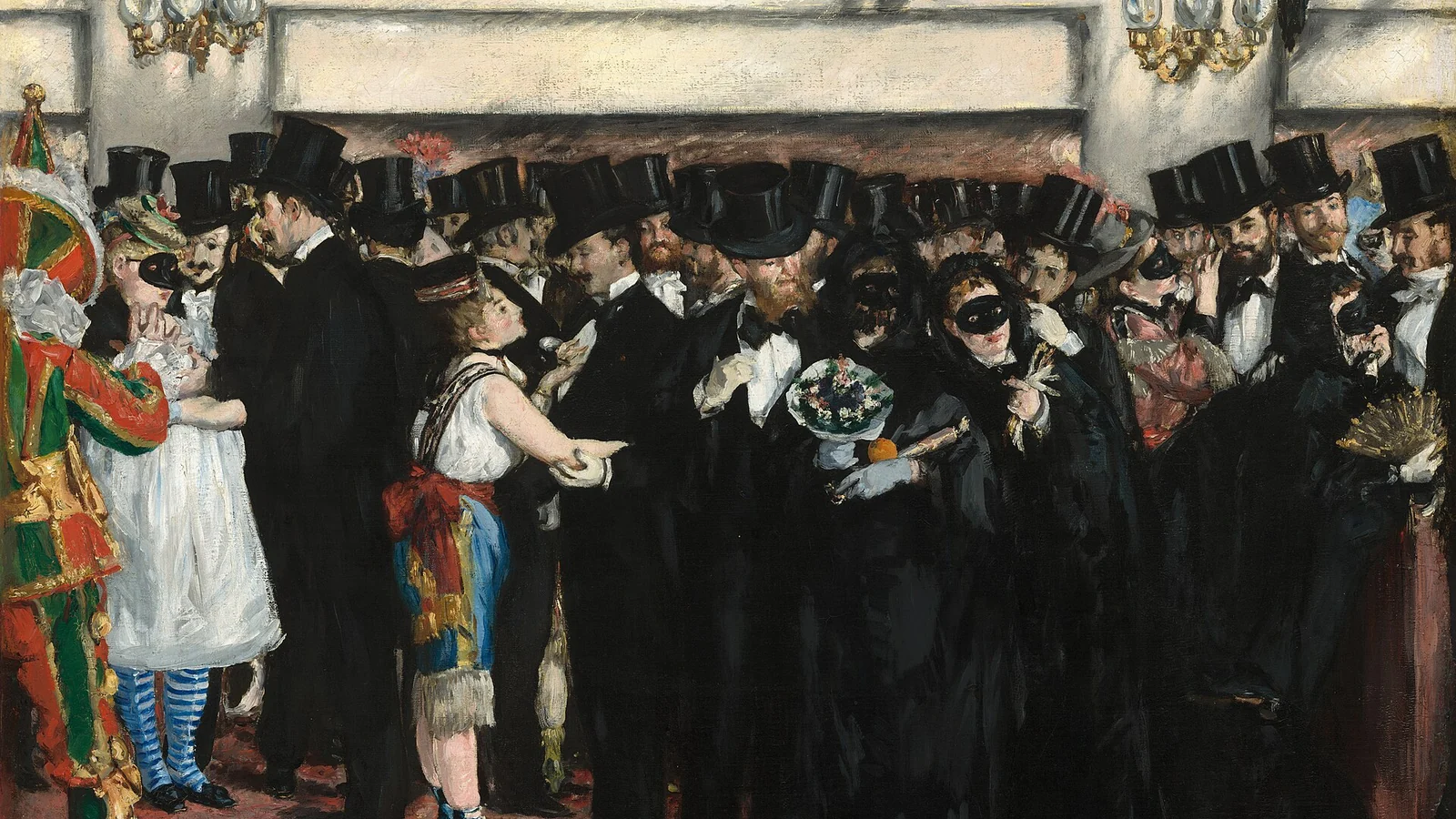
Eyes Wide Shut ending explained: Dr. Bill Harford spends a single night chasing the infidelity his wife has just confessed to, and never goes through with any of it. The next morning, in a toy store, Alice tells him they should be grateful they survived their adventures "whether they were real, or only a dream" — then answers his question about what they should do next with one word: "Fuck." The film ends there. It never says whether the marriage is repaired.
Most Eyes Wide Shut explained articles stop at the puzzle. Was the night real or a dream? Who was the woman at the morgue? What did Ziegler actually admit? Those questions have answers, and this article gives them in order. But none of them is the reason people are still arguing about this film 27 years after release. The reason is simpler and harder. The film's final line refuses to resolve the thing the previous two and a half hours were building toward. Alice does not say they will be fine, and she does not say she forgives him. She says a word that could mean reconciliation, could mean a threat, and could mean an alarm clock.
And the one person who could have told us which — Stanley Kubrick — died six days after delivering the cut. He had also, by one account, already refused to answer the question when it was put to him directly. That makes this ending structurally different from most ambiguous film endings. It is not ambiguous because the director was being coy in interviews he later gave. It is ambiguous because the director is gone, and left no statement about it. This article works through what actually happens, what the final word can carry, how the film rewrote its source novel, and what the production history tells us about whether the ending we have is even the one Kubrick intended.
Key Findings at a Glance
- Kubrick died on 7 March 1999, six days after delivering his final cut — and he had refused to explain the film's meaning when Nicole Kidman asked him directly.
- The film cost $65 million and earned $162.1 million worldwide, making it Kubrick's highest-grossing film in unadjusted dollars.
- Critics and audiences split harder than almost any film of its year: 77% on Rotten Tomatoes against a D− CinemaScore. Over fifty critics ranked it among the best films of 1999, and the French magazine Cahiers du Cinéma named it the best film of the year.
- The source novella ends with the couple greeting a new day. The film replaces that with a single crude word — the change that creates the argument.
- Production ran 400 days, a Guinness World Record, and Kubrick was still editing his films after release as late as The Shining.
- His cinematographer says the film was "never finished" — perhaps 70–80% of the way to what he intended.
Eyes Wide Shut Ending Explained: What Actually Happens?
The plot is easier than its reputation. Dr. Bill Harford and his wife Alice attend a Christmas party thrown by Victor Ziegler, a wealthy patient. Both flirt. Neither cheats. The next night, stoned, Alice confesses that a year earlier she was willing to abandon Bill and their daughter for one night with a naval officer she never spoke to. Bill is destroyed by this, and not by the fantasy itself. He is destroyed by the realisation that his wife has an interior life he has no access to. So he goes out, and the night unfolds as a sequence of temptations he refuses, each one closer to the thing he thinks he wants:
- A patient's daughter, Marion, confesses she loves him. He leaves.
- A prostitute, Domino, takes him to her flat. He stops before anything happens.
- An old medical-school friend, Nick Nightingale, mentions a job playing piano blindfolded at a house in the country.
- Bill obtains the password — "Fidelio" — and enters a masked ritual at a mansion called Somerton.
- He does not belong there, and he is exposed.
A masked woman intervenes and is apparently sacrificed to cover his escape. Bill is warned off by Ziegler the next day, learns the woman is dead, and finds the mask from Somerton lying on his pillow next to his sleeping wife. He breaks down and confesses everything. The next morning, the family goes Christmas shopping. That is the whole film, and the fact that it reads as a summary rather than a story is the point. Nothing in it is a plot event the ending resolves. Bill ends the night exactly where he started it, in bed with his wife, having done nothing. The film then spends its final four minutes refusing to tell you what that means.
What Does Alice's Final Word Actually Mean?
Alice's monologue first, because the word only works because of what precedes it. She says she thinks they should be grateful — "grateful that we've managed to survive through all of our adventures, whether they were real, or only a dream." She says she is as sure as she is that the reality of one night, let alone a whole lifetime, can never be the whole truth. Then the line most viewers remember, and the one that carries the entire ending:
"And no dream is ever just a dream. The important thing is we're awake now, and hopefully for a long time to come."
— Alice Harford, in the final scene
Then Bill asks what they should do. And she says it. The reading most critics settle on is that the word is deliberately physical, and that it does the opposite of what a final line usually does. Bill has spent the entire film inside his own head — constructing fantasies about his wife, imagining humiliations, treating the masked ball as a mystery to be solved. Alice pulls him back into the body. She refuses his earlier request that they stay together "forever," a word she treats as belonging to dreams. "Fuck" belongs to the present tense, and to nothing else.
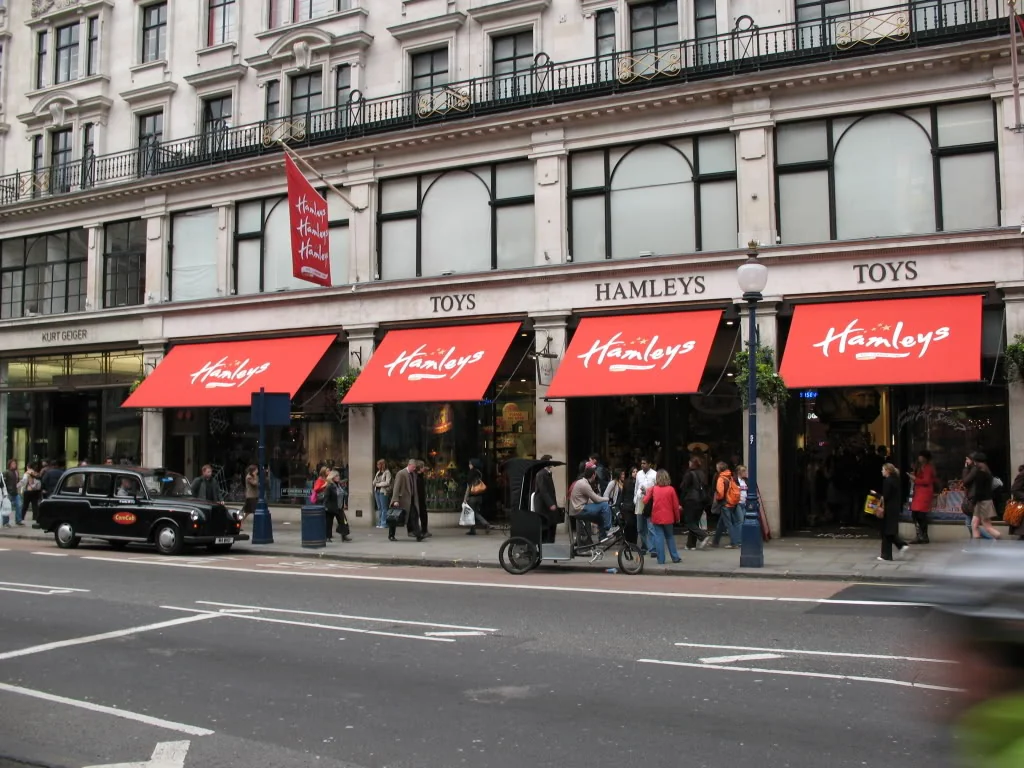
The Slovenian philosopher Slavoj Žižek reads it the other way, as a false exit — an act rather than a resolution, a way of avoiding the fantasy the couple has just uncovered rather than resolving it. On that reading the ending is not a reconciliation at all. It is two people agreeing to stop looking. Both readings survive contact with the film, which is why the argument has not closed in nearly three decades. The word is doing two jobs at once: it closes the scene, and it refuses to close the question. That is deliberate construction, and it is the reason this film has no settled explanation.
Why Has Nobody Settled This Ending?
Because the two people who could have settled it are unavailable, in different ways. Kubrick is dead. He delivered his final cut to Warner Bros. on 1 March 1999, and the film was screened for Tom Cruise, Nicole Kidman and studio executives the following day. A second screening followed on 5 March. Kubrick died of a heart attack during the night of 7 March, aged 70. He never gave an interview about the finished film, never recorded a commentary, and never published an explanation of any kind. Everything written about this ending since is interpretation, because the only authoritative reading died with him.
He had also, apparently, already been asked. Kidman told Vogue in 2025 that she put the question to him during production:
"I was saying, 'Well, Stanley, what does this mean?' And he was like, 'Don't ever ask me that!'"
— Nicole Kidman, to Vogue (2025)
That is not evasion at a press junket. That is a working method. Kubrick told an interviewer decades earlier that he would never explain his own work. Asked what he was trying to say in a picture, he quoted T. S. Eliot's answer about The Waste Land — "I meant what it said." He added that he would not attempt to convey what a film meant, because it would be unfair to try to convey somebody else's meaning and he would not be that unfair to himself. Cruise has talked around the question without closing it, describing the film as being about "the dynamic of a relationship that's affected by the raw emotions of obsession and jealousy," and saying plainly that it "isn't a movie about sex but about what sex represents." That is a theme, not an answer.
How Does the Film End Differently From the Novella?
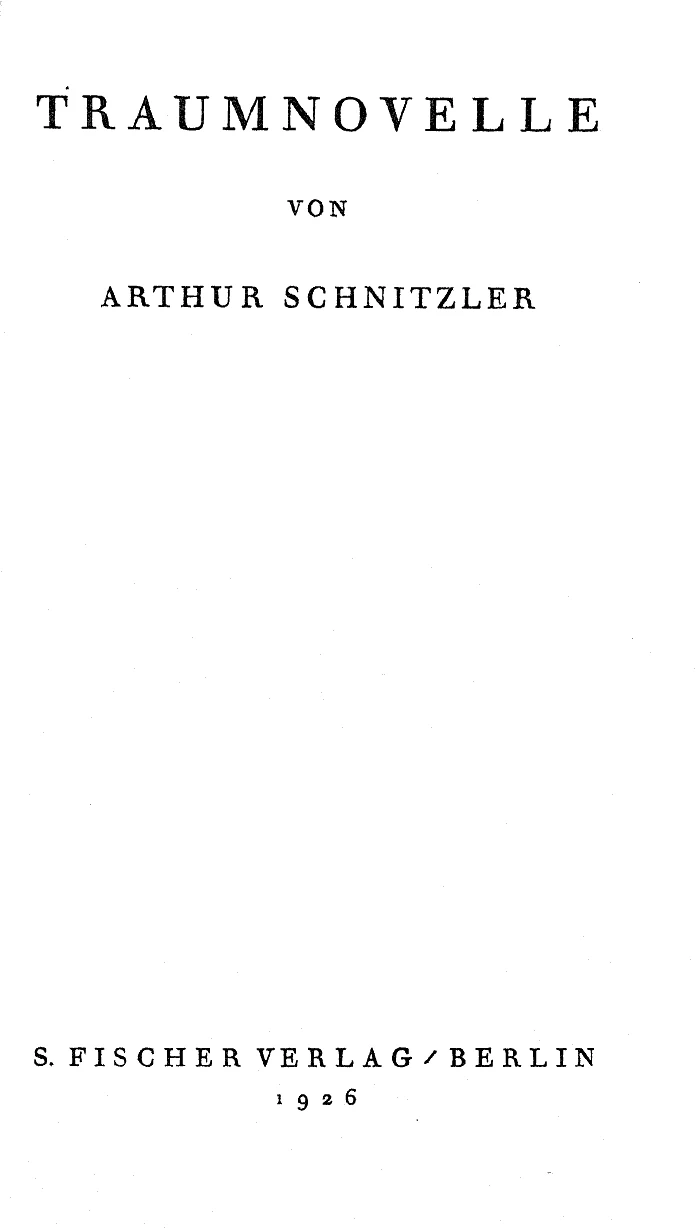
This is the section most explanations skip, and it is where the argument actually comes from. Kubrick read Arthur Schnitzler's 1926 novella Traumnovelle — usually translated as Dream Story — in 1968, while looking for a project to follow 2001: A Space Odyssey. He bought the rights with the help of journalist Jay Cocks. It took him thirty years to make the film, and by the time he did, the story had been rewritten in ways that change what the ending is even about.
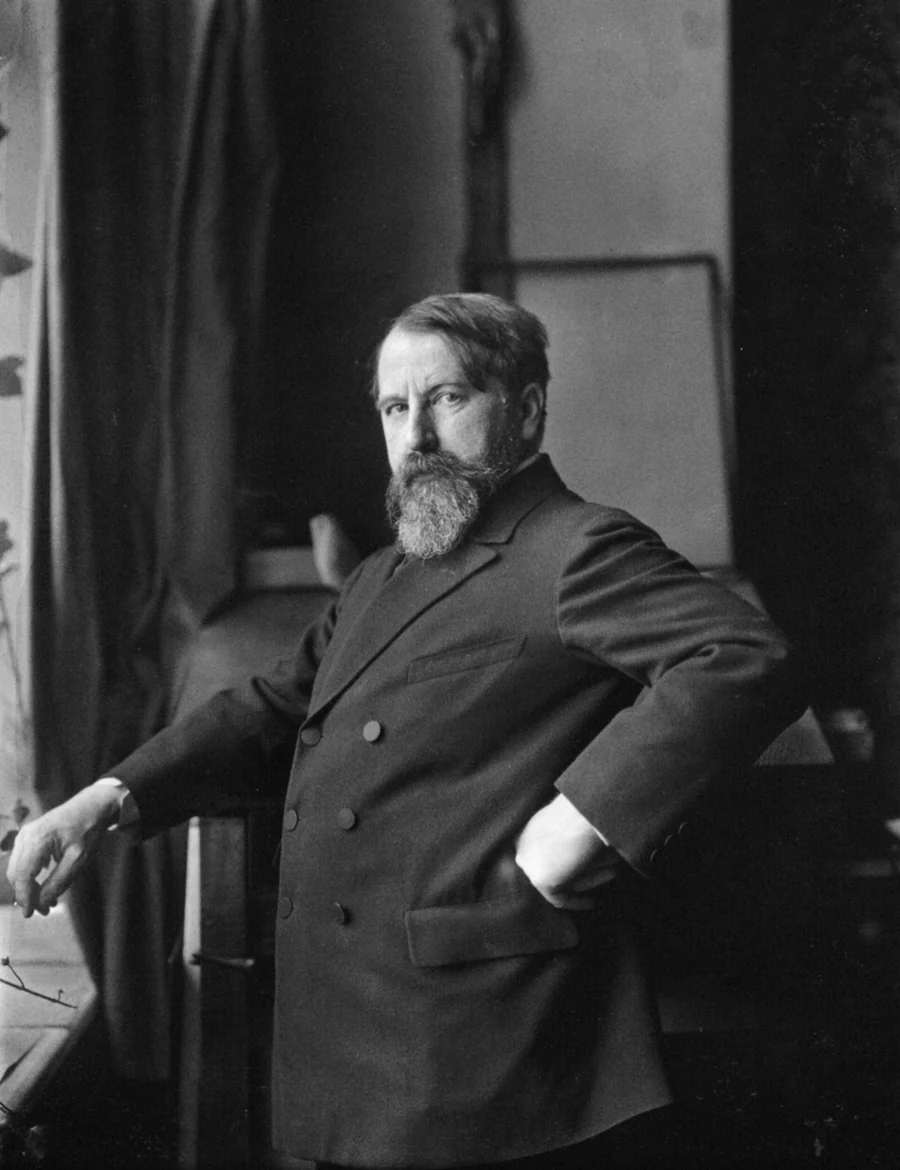
Schnitzler's story is set in Vienna. Kubrick moves it to contemporary New York and shifts the season to Christmas. The doctor becomes Bill Harford; his wife becomes Alice. The masked ball, the prostitute, the patient's daughter and the mask on the pillow are all in the novella. What is not in the novella is Victor Ziegler, whom Kubrick invented, and what is removed from it is Fridolin's Jewish identity, which in Schnitzler's Vienna is an unspoken source of danger at the masked ball. The endings, though, are the real departure.
Schnitzler closes with the couple greeting the new day with their daughter. Albertine tells Fridolin not to look too far into the future, and that what matters is that they survived their adventures. It is a warm ending. The marriage holds. The book is, unusually for Schnitzler, a story that does not end in catastrophe, and critics have treated that choice as the thing that makes it distinctive in his body of work.
| Schnitzler's novella (1926) | Kubrick's film (1999) | |
|---|---|---|
| Setting | Vienna, Mardi Gras, 1920s | New York, Christmas, 1990s |
| The couple | Fridolin and Albertine | Bill and Alice Harford |
| Final words | Albertine tells him not to look too far ahead. They greet the new day. | Alice: "Fuck." |
| Tone of the close | Reconciliation. The marriage survives. | Refusal. The film will not say. |
| Jewish identity | Fridolin's Jewishness is an unspoken source of danger at the ball. | Removed entirely. |
| What the reader feels | Relief. The crisis passed. | Unsettled. Something was decided, and withheld. |
The film also truncates the novella's central line. Schnitzler's Albertine says she is as sure as she is that neither the reality of a single night nor a whole human life represents "its innermost truth." The film stops the sentence earlier, at "the whole truth," dropping the philosophical claim about inner truth versus external fact. The critic John Simon called this a mistranslation. Whether it was carelessness or intent is unknowable now, but the effect is measurable: the film takes a novella that ends in daylight and gives it a last word that admits no daylight at all.
Is Bill's Night Real, or Is It a Dream?
The film deliberately makes this undecidable, and it has reasons. The title is a translation of Traumnovelle — dream story. The structure supports the dream reading. A costume shop opens in the middle of the night. Bill's wallet seems bottomless, producing hundreds of dollars for a cab, a costume and a prostitute. A woman he met once recognises him at a mansion he has never visited. He arrives home at four in the morning and works a full day without difficulty. The film was shot entirely at night, which gives the whole middle section a quality of continuous darkness with no dawn in it.
But the counter-argument is stronger than most "it was all a dream" theories, because the consequences are physical. The mask is real, and it is on the pillow. Ziegler discusses the dead woman in detail. The prostitute's roommate tells Bill she has been diagnosed with HIV. If the night were purely a fantasy, none of those would leave traces in the morning. The reading that holds both is that the events happened, but Bill perceives them through a fog of jealousy. He is not dreaming. He is awake and seeing badly, which is closer to what the title actually suggests — eyes open, and shut anyway.
Why Did Audiences Hate a Film Critics Loved?
The gap in 1999 was enormous, and it is worth stating precisely. Critics liked it. Rotten Tomatoes records 77% approval across 167 reviews, with an average rating of 7.90. Metacritic gives it 69 out of 100 from 34 reviews. Over fifty critics placed it among the best films of 1999, and the French magazine Cahiers du Cinéma named it the best film of the year. Audiences did not agree. CinemaScore, which polls opening-night cinemagoers, gave it a D−, close to the bottom of the scale. That is a genuinely unusual result for a film critics were ranking as the year's best.
The reason is marketing. Warner Bros. sold it as an erotic thriller starring Hollywood's most famous married couple, and audiences arrived expecting sex. What they got was a slow, cold film about a man who fails to have an affair. The trailer promised a different movie, and the reviews that followed the opening weekend could not undo the campaign. Box office followed the pattern: a strong opening of $21.7 million from 2,411 theatres, then a steep fall. That mismatch has not repeated. The film's reputation has climbed steadily since, which is typical of Kubrick's work — the same thing happened to 2001: A Space Odyssey and The Shining.
Was the Film Finished When Kubrick Died?
This question matters more than it sounds, because if the ending was still being worked on, the version we have is not necessarily the version he intended. Warner Bros. said it was complete. Terry Semel, the studio's co-chairman, stated after the first screening that "the film is totally finished" apart from "a couple of color corrections" and "some technical things." Others disagree. Larry Smith, the cinematographer, left the production two weeks before shooting ended and later said the film "wasn't completely finished in terms of color grading," estimating it was "70-odd-percent, 80%" of the way to where it should have been.
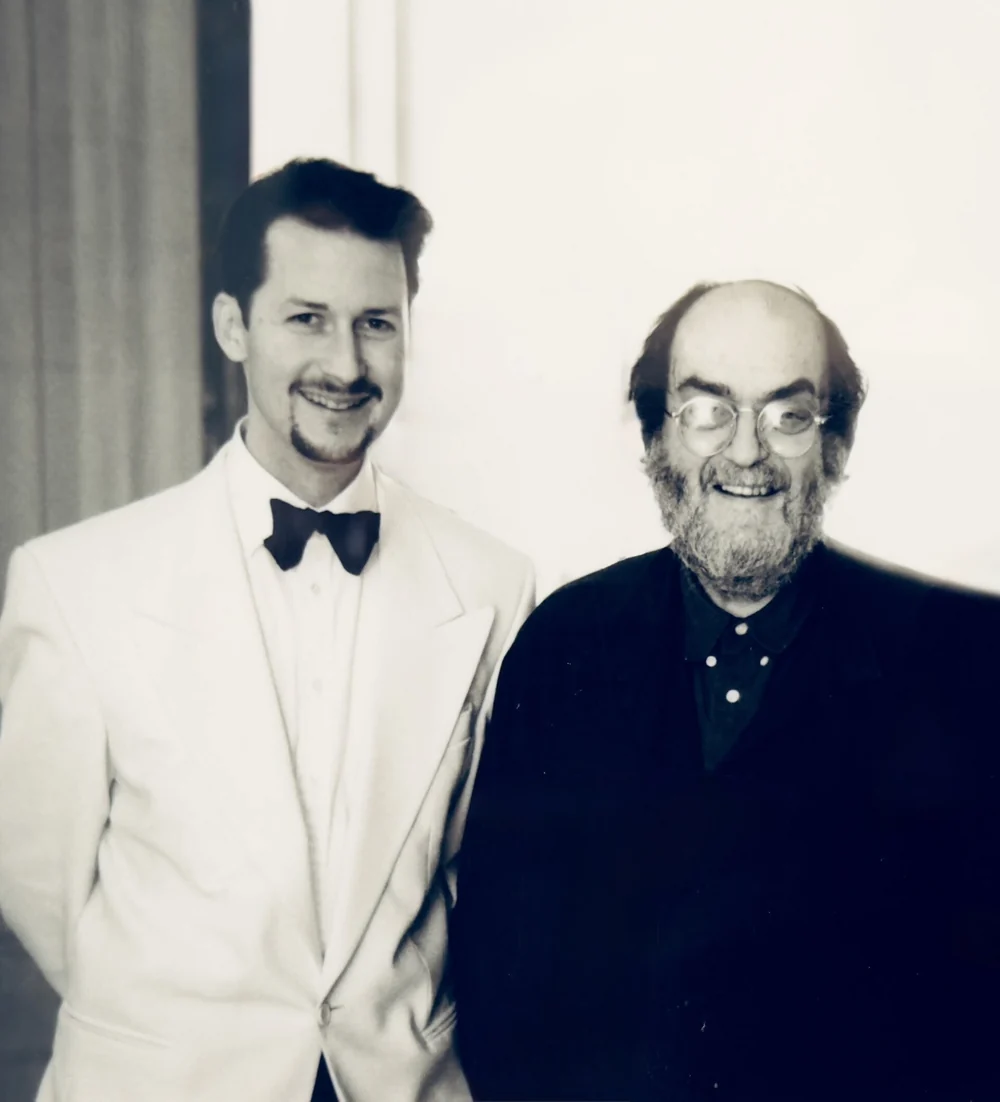
Garrett Brown, who invented the Steadicam, has called it an unfinished film, arguing the studio took the highest-numbered edit in the Avid and released it. Nigel Galt, Kubrick's editor, disagrees with both. Speaking in 2025, he said the cut was finished: "That cut is Stanley's cut the day he died. And nothing was over-edited. There was no Illuminati." The complication is that Kubrick had a documented habit of continuing to edit after release. He cut four minutes from The Shining after it opened. He recut 2001. A director who does that cannot be assumed to have stopped simply because he died. The honest position is that the ending we have is Kubrick's, and that Kubrick might well have changed it.
What Is the Mask on the Pillow?
Kubrick's original script makes the intended reading explicit, in a voice-over that describes Alice having found the mask and placed it on the pillow "as though it signified his face, the face of a husband who had become an enigma to her."
That line was cut from the finished film. Without it, the mask has to carry the same idea visually: the thing Bill used to hide has been returned to the place where he sleeps, and his wife has touched it. It is also the reason the confession happens. Bill does not confess because he is caught. He confesses because the mask tells him his secrecy was never secret — which is the exact fear Alice triggered at the start, when she revealed she had an interior life he knew nothing about.
Was Helena Taken in the Toy Store?
There is a persistent theory that the Harfords' daughter is being abducted during the final scene, and it deserves a straight answer. The evidence people cite is real. Two men who appear at Ziegler's Christmas party at the start of the film reappear in the toy store, visible behind Bill and Alice. Helena drifts out of the conversation and back in. The toy store is full of rainbow imagery, echoing the rainbow of coloured items elsewhere in the film. And the final conversation between Bill and Alice is oddly long and uninterrupted for a scene taking place in a shop with a small child in it.
Most critics read this as metaphor rather than plot. The toy store is consumer normality — the brightly lit, cheerful surface that the film has spent two hours showing you the underside of. Helena walking away is the next generation entering the same arrangement, not a kidnapping. Her name is a deliberate nod to Helen of Troy, and by extension to the Trojan maze, which is the film's structural image for a puzzle you cannot see from outside.
The film gives you no scene in which she is taken, no reaction shot from her parents, and no consequence afterwards. Treat it as an atmosphere, not a plot point. The scene is doing something else: it puts the Harfords back inside ordinary consumer life, in daylight, surrounded by children's toys, while their daughter walks out of frame. That contrast between the brightly lit shop and the night before is the whole ending in one image.
What Should You Watch For on a Second Viewing?
Three things change on a rewatch, and all three are built into the first ten minutes. First, the mirror. The film's opening shot is Alice undressing, watching herself in a mirror. That image recurs throughout — Bill searches for his reflection, characters are framed in glass, and the masked ball is a room full of people hiding their faces while watching each other. The film is about seeing and being seen, and it states that in the first thirty seconds.
Second, the password. "Fidelio" is the name of Beethoven's only opera, which is about a wife who risks her life to rescue her husband from a political prison. It also means "faithful." When Bill gives it at the mansion he believes he is the rescuer. He is the one who needs rescuing, and he does not know the second password — the one for the house — which is how the room identifies him as an intruder. Third, the Christmas lights. They are on when desire is present and off when the scene is cold. At the end, in the toy store, a small set of lights is visible. It is a quiet signal that something has been relit, and it is the closest the film comes to telling you how to read its final word.
Frequently Asked Questions
Does Bill cheat on Alice in Eyes Wide Shut?
No. He is offered sex by a prostitute, by a patient's daughter, and by a woman at the masked ball, and declines or is interrupted every time. The film's central irony is that a man spends an entire night pursuing infidelity and never commits it, while his wife's confession was about a fantasy she never acted on either.
What does "Fidelio" mean in Eyes Wide Shut?
It is the password Bill overhears from Nick Nightingale and uses to enter the Somerton mansion. It is the title of Beethoven's only opera, which concerns a wife rescuing her imprisoned husband, and it is also the Latin word for "faithful." Bill thinks it is a key. It is actually a taunt.
Is the whole night a dream?
The film refuses to say, and both readings are supported. The dream reading fits the title, the surreal pacing, and the bottomless wallet. The literal reading fits the physical evidence: the mask on the pillow, the dead woman Ziegler discusses, and the HIV diagnosis. The most defensible position is that the events happened and Bill perceived them through jealousy.
Why did Eyes Wide Shut get a D− CinemaScore?
Because it was sold as an erotic thriller and delivered something slower and colder. Warner Bros. marketed it around the real-life marriage of its two stars, and audiences arrived expecting a different film. Critics, who were not relying on that campaign, rated it 77% on Rotten Tomatoes and named it one of the best films of 1999.
Did Kubrick ever explain the ending?
No. He died on 7 March 1999, six days after delivering his final cut, and gave no interview about the finished film. Nicole Kidman said she asked him what it meant during production and he replied, "Don't ever ask me that!" His only recorded statement about the film's theme was that it "explores the sexual ambivalence of a happy marriage."
Is the film finished?
Disputed, and it will stay disputed. Warner Bros. said it was complete apart from minor technical work. Kubrick's cinematographer Larry Smith estimated it was 70–80% finished. His editor Nigel Galt said the cut was exactly what Kubrick intended. Because Kubrick was known for re-editing films after release, no answer is fully verifiable.
What should I watch after this one?
If you want another ending that resists resolution, see Donnie Darko, where the director eventually explained the rules and the argument continued anyway, or Shutter Island, where a single added line reopened a twist the novel had closed.
Sources
- Eyes Wide Shut (1999), dir. Stanley Kubrick. Warner Bros. / Stanley Kubrick Productions / Pole Star / Hobby Films. 159 minutes.
- Box office figures: Box Office Mojo and IMDb — $65,000,000 budget; $55,691,208 domestic; $162,091,208 worldwide; $21,706,163 opening weekend from 2,411 theatres.
- Rotten Tomatoes: 77% approval, 167 reviews, 7.90 average. Metacritic: 69/100 from 34 reviews. CinemaScore: D−.
- Arthur Schnitzler, Traumnovelle (Dream Story), first published 1926.
- Nicole Kidman interview with Vogue, reported by People, October 2025 — Kubrick's response to being asked what the film meant.
- Nigel Galt interview, 2025 — on the state of the final cut.
- Larry Smith interview with SlashFilm on the Criterion 4K restoration — on the film's unfinished colour grading.
- Newsweek, 1999 — Kubrick's recorded statement that the film "explores the sexual ambivalence of a happy marriage."
- Guinness World Records — longest constant film shoot: over 15 months, including an unbroken shoot of 46 weeks.
- John Simon, review of Eyes Wide Shut, 1999 — on the film's truncation of Schnitzler's closing line.
- The Guardian, 2015 — discovery of an alternative ending to Schnitzler's story in an earlier manuscript draft.

Open Ending Editorial
Film analysis desk
We write about films that refuse to answer their own questions. Every claim is sourced to a primary interview, a box-office record, or a review aggregate — and where a source does not exist, we say so instead of guessing.